

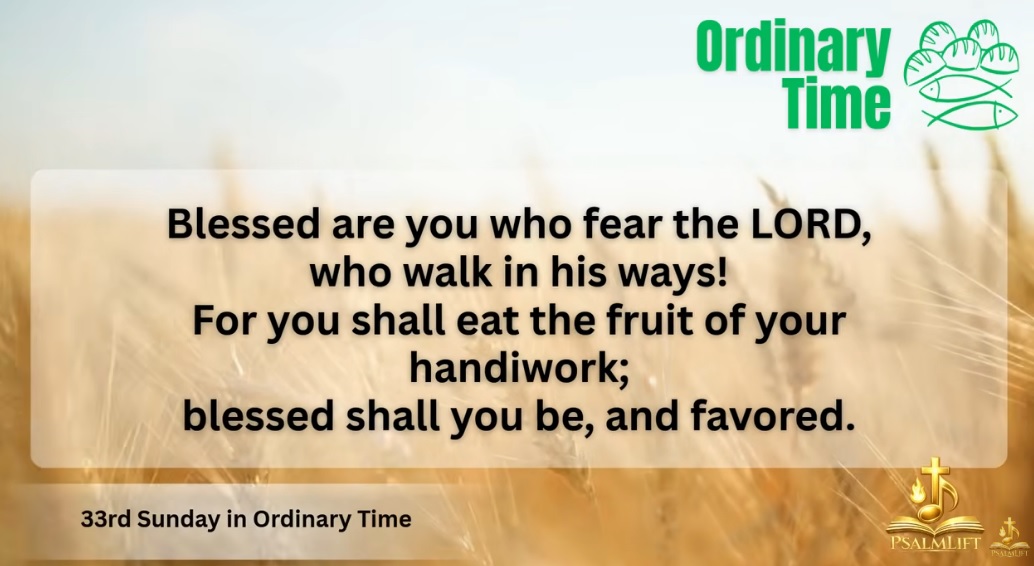
When we lived on Xavierville Avenue and in Antipolo in the 90s, we regularly attended Sunday Mass at a small community church. One thing I loved about the ceremony there was the responsorial psalm, which was sung. The psalmists had such angelic voices that I found myself humming along with them. They made it easier for me to absorb the psalm’s message.
Here in CDO, I grew to love responsorial psalms even more when I taught at Philippine Southfield School. One of my responsibilities was to train students assigned to read during our First Friday Masses (and other significant celebrations). When seminarians came in to help us with the Holy Masses, they trained students to sing the responsorial psalms. We chose students who had angelic or soothing singing voices because they could easily capture the attention of the crowd.
What is the Significance of the Responsorial Psalm?
In Christian worship, including the Catholic Mass, the responsorial psalm plays an important role. It is the segment of the Liturgy of the Word that serves as the response to the scriptural reading. After the First Reading, the Mass attendees pause for a few seconds, then the psalmist/cantor takes the stand to lead the crowd’s answer to the message. The responses are taken from the Book of Psalms, which consists of Biblical poetry.
It’s also a shared prayer as the psalmist sings the stanzas and the congregation answers by repeating the antiphon or refrain.
Lastly, the responsorial psalm helps us to internalize and meditate on the message of the First Reading.
PsalmLift
One of the challenges of preparing a musical responsorial psalm is ensuring that it is not only musically correct but also easy to remember (for the antiphon). This is essential in ensuring that the congregation can clearly hear and understand the verses. The musical style should also be as simple as possible so that even those without vocal training can easily sing the refrain. The most common example of psalm music is the Gregorian Chant.
While it is not a complex process, coming up with a musical responsorial psalm requires a lot of time, effort, and resources. This is why we’re lucky to have PsalmLift, an online resource for all the musical responsorial psalms you need.
PsalmLift is like a library of responsorial psalms that you can access through your favorite audio streaming platform. On Spotify, it is described as “Sacred Music that Lifts the Soul.” While the first batch of Lent psalms is already up on Spotify, PsalmLift will unveil its Advent collection before the season sets in.
To learn more about PsalmLift – how it started, what it offers, and how we can access and use it – I interviewed the executive producer. Here’s how the interview went:
1. What inspired PsalmLift and the Advent responsorial psalms?
The PsalmLift story goes back to my college days in the ’90s. Our chaplain wanted us to sing the Responsorial Psalm at Mass. Whenever it was our turn to sponsor a Monday or Sunday Mass, we’d go to the sacristy, copy the psalm from the Lectionary, then pick up the guitar and work out a melody. What began as an obligation became a habit. Eventually, it became part of our lives.
I stopped composing psalm melodies after college. In 2026, I felt the Spirit move me to return to it. This time, I had the tools to record the arrangements and share them online. That’s how PsalmLift began. I wanted parish cantors, choir directors, and choirs to have something they could bring to rehearsal for Sunday Masses, solemnities, and feasts. I also wanted people in the pews to feel comfortable joining in the response.
For Psalms for Advent (Cycle B), I kept coming back to what it means to wait with hope. In the middle of a busy season, I wanted the music to give people a moment to slow down and pray with the words.
2. What goes into making an arrangement?
I start with the psalm text for that Sunday and let the natural rhythm of the words guide the melody. I work on the refrain first and ask myself, “Could someone sing this back after hearing it once?” I keep that same tune each time the refrain returns. For the verses, I give the psalmist/cantor room to breathe and phrase the text naturally, then build the accompaniment around the voice so every word comes through.
3. Do responsorial psalm arrangements need Church approval?
At Mass, the refrain and verses should ordinarily come from the approved Lectionary. The musical setting also needs to follow the applicable liturgical guidelines. Some dioceses require formal approval for new compositions, so before introducing a new PsalmLift setting at Mass, I’d check with the parish priest or diocesan liturgy office about what’s required.
4. Who can benefit from PsalmLift, and is it free?
Yes, anyone can watch and listen to the public videos for free. You can pray with the psalms at home, learn the Sunday response before Mass, or rehearse with your choir. For selected collections, I also offer free piano chords and instrumental backing tracks for practice.
You can check out PsalmLift on YouTube for the videos.
You’re welcome to share the original links. To re-upload a recording or use it in another production, please request permission at psalmlift@gmail.com.
5. Are there plans for Lent or other seasons?
Yes. My goal is to set every Responsorial Psalm to music across Cycles A, B, and C. We’ve completed Cycle A and are beginning Cycle B with Advent. From there, we’ll work through the rest of Cycle B, including Lent, Holy Week, and Easter.
Two of our Cycle A collections are already on Spotify.
- Ash Wednesday through Easter Sunday — Cycle A Lent collection
- Easter Sunday through Pentecost — Psalms of Resurrection
For more psalm collections, just search PsalmLift on Spotify. You can also visit our Facebook page.
PsalmLift’s Psalms for Advent (Cycle B) will be available on major streaming channels soon. Follow PsalmLift to stay updated, so you can start preparing for your Advent season meditation and reflections.
_____
And there you have it—everything you need to know about PsalmLift! More than just a collection of psalms for the Holy Mass, PsalmLift is a free resource we can turn to whenever we need inspiration, spiritual encouragement, or a little lift after a gloomy day. It reminds us that sometimes, all we need is a moment with God’s Word to find comfort, hope, and renewed strength.
Looking back, I realize that what I loved most about those sung responsorial psalms was how they made God’s Word come alive through music. Whether it was the angelic voices of the psalmists in that small community church or the students our seminarians trained to sing during school Masses, the experience always left a lasting impression on me. That’s why I find PsalmLift such a lovely resource. It brings back those memories while allowing us to appreciate the beauty and message of the psalms anytime we want.
If you enjoy listening to the responsorial psalms or simply want a little spiritual inspiration in your day, check out PsalmLift on Spotify and YouTube. You just might find yourself humming along!
Leave a Reply